Book Buddies: Fostering Literacy Through Peer Reading
A solo UX research case study on engaging early readers through a peer-based literacy program at a local tutoring center.
Project Overview
Boost reading engagement and comprehension in students ages 7–10 via peer collaboration.
- Interviews
- Contextual Inquiry
- Concept Mapping
- Prototyping
Solo project with support from tutoring center staff and student participants.
Problem Space
Students lacked the motivation to read and struggled with comprehension despite interventions like tutoring.
- Many upper elementary students show low motivation to read for pleasure and struggle with comprehension.
- Existing programs (e.g., book clubs, summer reading programs) lacked accountability and engagement.
- Minimal success with existing programs
- Literacy deficits persist despite frequent reading-related tutoring.
Research Plan & Methods
Conducted UX research with 7 children aged 7–10 to uncover their reading habits, comprehension behaviors, and attitudes toward reading. All participants were recruited from the tutoring center's existing student base.Beyond the general enrollment consent already on file, I obtained additional informed consent from each student's parent or guardian specifically for research participation. Sessions were conducted in the familiar tutoring environment to minimize discomfort and preserve ecological validity.
1-on-1 Interviews
Semi-structured interviews with all 7 students explored book preferences, reading habits, and strategies they used when encountering unfamiliar vocabulary. Questions were adapted in real time based on each student's responses to keep conversations age-appropriate and comfortable.
Child-led Walkthrough (Contextual Inquiry)
The same 7 students were observed during class reading time, narrating their thought process as they read. This surfaced real-time comprehension strategies, and breakdowns that students couldn't have articulated in an interview alone.
Synthesis
Findings across both methods were reviewed together to identify patterns, with interview responses cross-referenced against observed behaviors. This revealed gaps between what students said they did and what they actually did when reading, a key insight that directly shaped the Book Buddies concept.
Key Findings
Across 7 interviews and contextual inquiry sessions, three consistent patterns emerged. Students didn't lack reading ability — they lacked motivation and social context for it. Reading was broadly experienced as a solitary, school-imposed obligation rather than a choice. Observed behavior frequently contradicted self-reported habits: students who described themselves as non-readers demonstrated genuine engagement when reading aloud with a peer during sessions. These findings pointed clearly toward a social, peer-based intervention rather than additional skills-focused tutoring.
- 5 of 7 students said they didn't read for fun; reading is seen as a chore not a choice.
- Most of the recently read/texts books were those they'd been assigned in class.
- Graphic novels are popular but not considered “real” reading by some students parents/guardians.
- Poor comprehension strategies: students often skip to questions without reading the passage thoroughly.
- Several struggled when the answers were not very straight forward, drawing conclusions.
- Students are more motivated when reading socially or with peers.
- Fluency Issues.
Ideation & Concept Development
Concept: Book Buddies
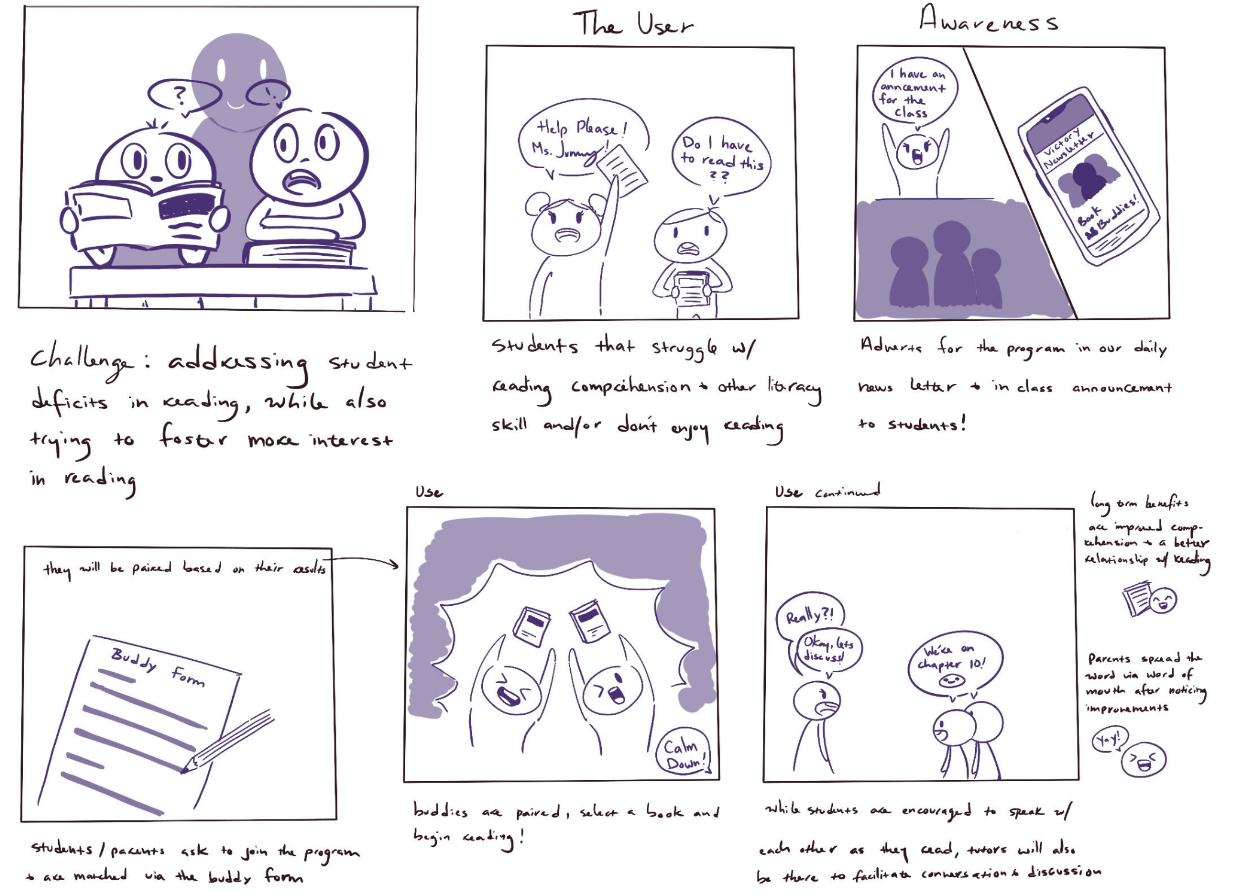
A peer reading program designed to foster a love of reading and build comprehension in a fun, supportive environment. Students choose partners and books based on their interests, read together, and engage in structured discussions to deepen their understanding. It is an opportunity for students to take ownership of their reading journey and develop lifelong literacy skills via friendship and shared stories.
Design Challenge
Working to address student deficits in reading, comprehension and the lack of interest in reading at the tutoring center where I work. Are there more engaging ways to improve the reading vocabulary, fluency,and comprehension of our students while also fostering greater interest in reading?
"How might we inspire students to enjoy reading outside of school while also equipping them with the skills to comprehend diverse texts and draw meaningful conclusions?"
Impact Strategy
Inspiring Students to Enjoy Reading:
- Paired reading makes literacy feel social and fun
- Student choice in partners and books increases ownership
- Reading becomes a shared experience rather than a solo task
Building Comprehension Skills:
Partners help each other interpret and ask questions
Students reinforce comprehension strategies through peer discussion
Shared accountability improves focus and fluency
Concept Map
Prototype: Flyer Mockup
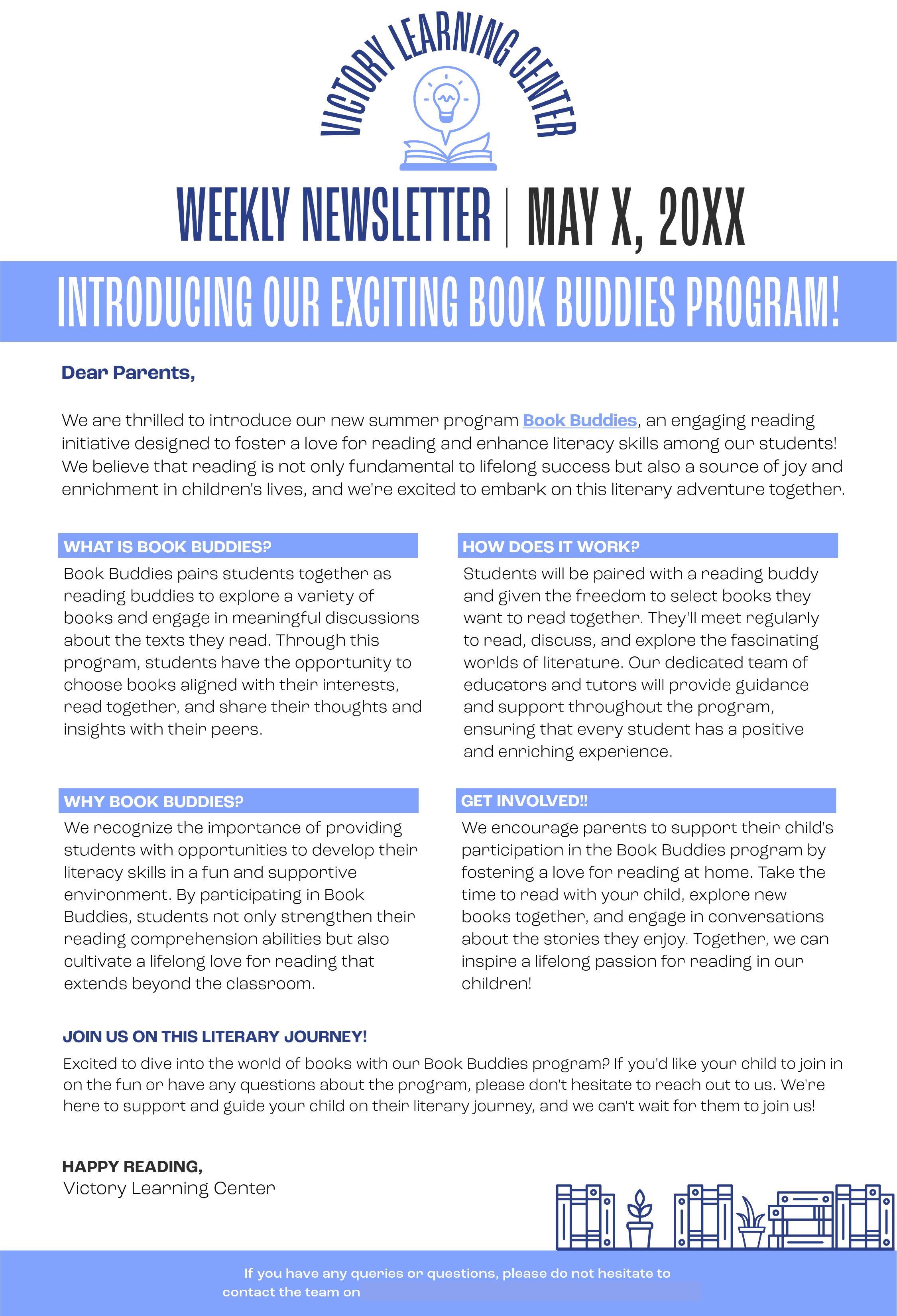
Flyer Mockup
Intended to be distributed via email, this prototype announces the summer program and shares its goals with families. It's meant to test parent-facing communication and generate early interest.
Program Goals
- Building enthusiasm for shared reading
- Promoting comprehension strategies through conversation
- Creating sustainable habits beyond tutoring hours